
Intensive military operations by U.S. and Israeli forces against Iran continue. According to information released by Iranian state media, at least 1332 people have been killed in the country as a result of military attacks. Various independent sources report that the number of deaths caused by the war is several times higher.
According to statistics from the Iranian Red Crescent Society, at least 6668 civilian sites have been targeted in U.S.–Israeli attacks since the beginning of the war. Of these, 5535 were residential buildings and 65 were schools.
Experts believe that events over the past few days show that Iran has begun to prioritize a strategy known as the “geopolitical distribution of pain.” As a result, it is attempting to draw several neighboring countries, especially Azerbaijan, which plays a critical role in energy security into the center of this tension.
Azerbaijan targeted: Why did an Iranian drone target Nakhchivan?
On March 5, Iran fired drones at the Nakhchivan region, damaging Nakhchivan International Airport. According to official reports, four people were injured to varying degrees. Azerbaijani President Ilham Aliyev, the Ministry of Foreign Affairs, and the Ministry of Defense sharply criticized Iran over the incident.
Later Iranian President Masoud Pezeshkian delivered a televised video address on Iranian state television apologizing to neighboring countries that had been attacked. Without naming specific countries, the president added that the three-member leadership council temporarily governing Iran had instructed the armed forces that neighboring countries should no longer be attacked, and missiles should not be launched if those countries do not intend to attack Iran.
“I believe that instead of fighting neighboring countries and creating problems, we should resolve these issues through diplomacy,” Pezeshkian added.
However, he also warned neighboring countries, particularly Gulf states, not to become “tools of imperialism,” cautioning them against allowing attacks on Iran from their territories.
Countries of the Gulf Cooperation Council (GCC)- Saudi Arabia, Qatar, the United Arab Emirates, Kuwait, Bahrain, and Oman have been potential targets due to the presence of U.S. military bases within and around their borders. Iraq, Jordan, Azerbaijan, and Turkey are also considered at risk.
According to Izat Noah, an Iraqi-born researcher in international relations, Azerbaijan’s targeting, especially after strikes on several other countries in the region, is part of the strategy known as the “geopolitical distribution of pain.”
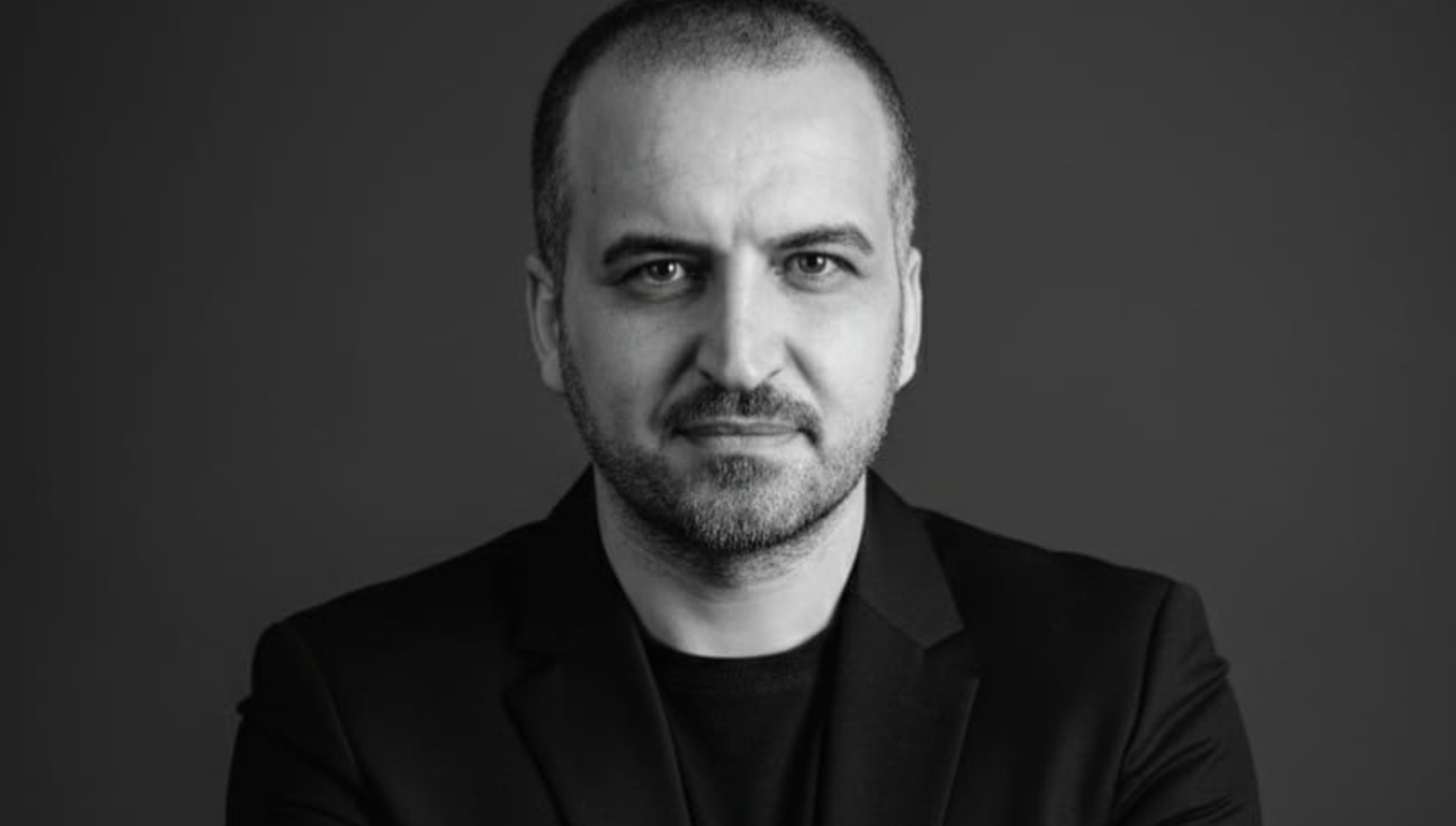
The strategy of “distribution of pain,” sometimes referred to as the “diffusion of geopolitical pain,” is a term used in military and geopolitical contexts.
“The goal is to send a clear message: if Tehran is attacked, no capital in the region will be safe. It also targets Israel’s interests in the region, since Azerbaijan is one of Israel’s most important regional partners. Iranians view Azerbaijan as an advanced intelligence hub that has been the source of many leadership operations and intelligence leaks,” the expert said.
According to Noah, Azerbaijan is also one of Israel’s main oil suppliers.
“Data from 2025 shows that approximately 46,4 percent of Israel’s crude oil imports come from Azerbaijan, making it the country’s primary energy supplier. In the same year, Azerbaijan’s gas exports accounted for roughly 4 percent of the European Union’s total annual gas imports. After the war in Ukraine reduced Europe’s dependence on Russian gas, Azerbaijan became a key alternative energy source for the continent.”
Noah believes that Iranian strategists assume that striking countries with economic and political ties to what they see as an “adversial axis” could pressure the U.S. administration to reconsider its policies in the region.
“This targeting could also directly affect Israel’s economy. Israel’s significant dependence on Azerbaijani energy supplies could lead to higher energy costs and instability in Israeli markets.”
The war: Differences in approach and future predictions
According to Georgian security expert Shalva Dzebisashvili, former head of the Defense Policy and Planning Department of the Georgian Ministry of Defense and currently head of the Political Science and International Relations program at the University of Georgia, Iran is going through a period of generational change, and society wants liberal transformation that includes social, economic, and especially political reforms that the current regime has failed to provide.
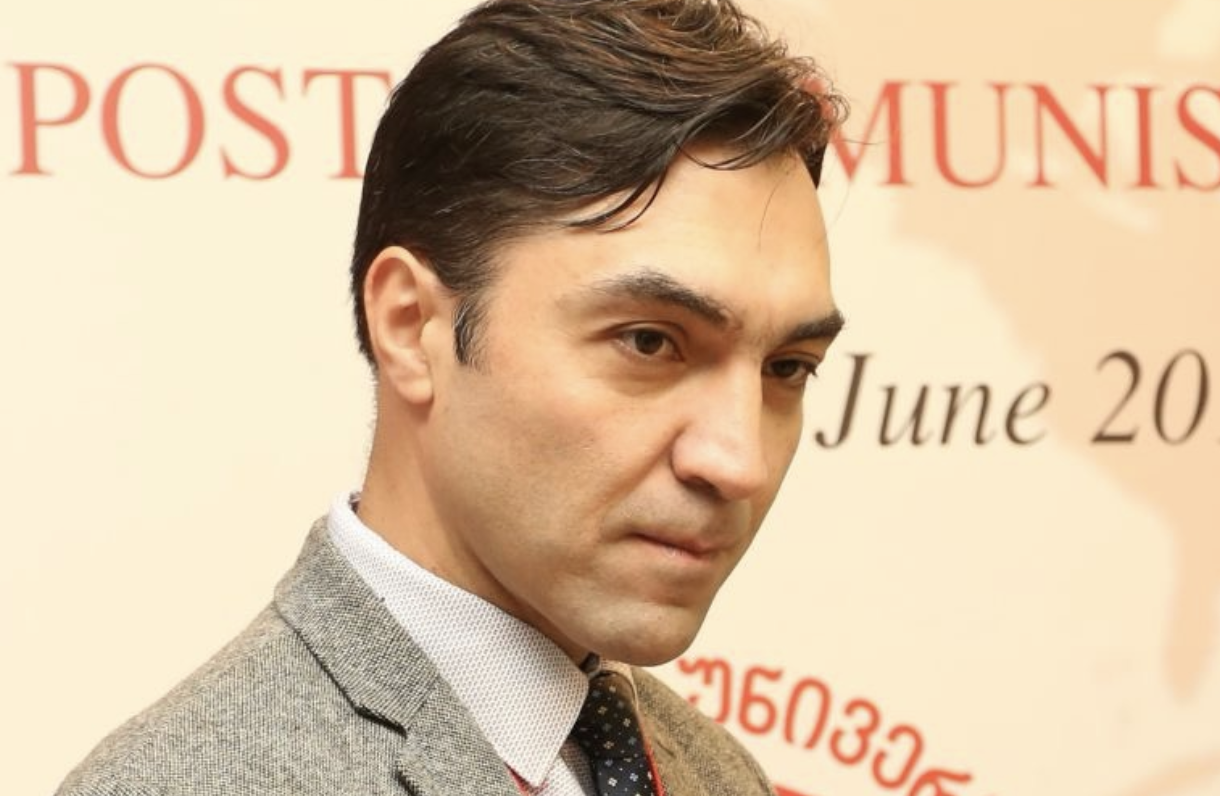
“Lessons learned from Iraq and Afghanistan tell very vividly that military victory is just the beginning of a much more arduous work - nation-building. These attempts failed in Iraq and Afghanistan. It remains to be seen whether building of a new Iranian nation will be a success,” he said.
He believes the Iranian people are among the most capable in the Middle East of establishing a functional democracy. Otherwise, the country has no future, as it faces many risks and threats in nearly every sphere of state activity.
Meanwhile, Izat Noah believes there is a difference in approach between Israel and the United States regarding the Iranian regime.
“Although both sides agree on the need to limit Iran’s nuclear ambitions, curb its regional influence, and reduce the threat it poses to Israel and U.S. allies in the region, the United States appears to hold a somewhat different position. Washington prefers a change in Iran’s behavior rather than a complete regime change; it wants Iran to remain a unified state that could potentially cooperate with Israel and help maintain regional balance alongside countries such as Turkey and Saudi Arabia.”
According to the expert, a similar approach could be seen in Venezuela.
“After President Maduro was arrested, the United States did not attempt to completely dismantle the Venezuelan regime. Unlike in Iraq, it did not destroy the ruling party or dismantle the military and security institutions. It focused mainly on replacing the president. Israel’s perspective, on the other hand, is focused on overthrowing the Iranian regime at any cost and sees the fragmentation of ideologically hostile states as necessary to ensure its regional superiority.”
Dzebisashvili believes that two main factors influenced the decision to launch a military attack on Iran.
"The first factor is the popular uprising and massive (previously unseen) scale of killings of protesters by regime forces. The second factor is the regional dynamics and 'unfinished" missions in many places concerning Iran-Israel confrontation. The rest, such as nuclear or energy factors additionally contribute to the "military' solution of the Iran puzzle."
How long will the war last?
Noah believes it is difficult to predict the duration of the conflict, especially for actors outside the main participants, particularly the United States, which holds the balance of power.
“President Trump stated that the war could achieve its goals within four to six weeks. This statement recalls the U.S. position during the 2003 invasion of Iraq, when Defense Secretary Donald Rumsfeld said the war might last between six weeks and six months and was unlikely to take longer. Despite differences in the nature of the current conflict, determining its precise duration remains difficult due to many military and political variables.”
Dzebisashvili believes the current Iranian regime cannot compete with the U.S.–Israel alliance and will inevitably shift to unconventional warfare (Taliban-style) in order to survive militarily and later politically.
“I believe the military infrastructure will be significantly decimated, and an alternative political center will be established (somewhere in a the provincial capital), which will enjoy the U.S.-Israeli military support. This in turn will allow the so-called opposition forces to start marching towards Tehran and declare "liberation" of Iran. But it will not be a quick game,” he said.
Could NATO join the conflict?
NATO members continue to feel the effects of the war in the Middle East. Turkey reported intercepting a missile fired from Iran, and drones reportedly targeted a British base in Cyprus.
However, NATO Secretary-General Mark Rutte told Reuters that there is no intention to invoke “Article 5”. Experts note that the threshold for activating NATO’s collective defense clause is very high.
Noah also believes NATO is unlikely to become involved under current conditions, especially given that the U.S. and Israel do not intend to launch a ground invasion of Iran.
He also noted that NATO is unlikely to devote additional resources to a conflict that does not represent a strategic threat comparable to those posed by Russia or China.
Furthermore, many NATO members are currently focused on supporting Ukraine against Russia. Differences in positions and conflicts of interest among member states also exist. For example, Turkey (NATO’s second-largest army) could oppose any intervention because it might strengthen the Kurdish presence in Iran, which Ankara views as a threat to its own security.
Meanwhile, repeated threats of China potentially taking control of Taiwan push the United States and its allies to focus more on the Indo-Pacific region, reducing the likelihood of NATO becoming involved in a new Middle Eastern conflict, Noah says.
Why are Russia and China not supporting Iran?
In January 2025, Russia and Iran signed a comprehensive strategic partnership agreement covering trade, military cooperation, science, culture, and education. The agreement deepened defense and intelligence coordination and supported projects such as transportation corridors linking Russia to the Gulf through Iran.
Just a week before the U.S.–Israeli attack on Iran, the two countries conducted joint military exercises in the Indian Ocean.
However, Andrey Kortunov, former director general of the Russian International Affairs Council and a member of the Valdai Discussion Club, told Al Jazeera that Moscow is unlikely to conduct direct military operations in support of Iran because the risks would be too high. He added that Moscow currently prefers U.S. mediation in the conflict with Ukraine.
China also signed a 25-year cooperation agreement with Iran in 2021, aiming to expand ties in areas such as energy and incorporating Iran into China’s Belt and Road Initiative.
However, Jodie Wen, a researcher at Tsinghua University’s Center for International Security and Strategy, emphasized that Beijing has long maintained clear limits regarding military involvement in partnerships.
“The Chinese government has always adhered to a policy of non-interference in the affairs of other countries… I do not think China would send weapons to Iran,” she said.
Political analyst Izat Noah also believes that despite condemning attacks on Iran, Russia and China have not provided tangible support to Tehran.
“China is among the countries most affected by such a conflict because it seeks to avoid damaging its economic relations with the United States and Gulf states. China is one of the largest importers of Saudi oil and maintains strong economic ties with the United Arab Emirates, an important market for Chinese goods. Although China purchases about 90 percent of Iran’s oil exports, it has not provided concrete support to Tehran and appears focused on maintaining global supply chain stability”.
As for Russia, the expert notes that it is deeply involved in the war in Ukraine and currently lacks the capacity to join another conflict.
At the same time, the continuation of the war could benefit Russia economically because rising global energy prices allow Moscow to sell more oil, including through the so-called “shadow fleet.”
The “shadow fleet” refers to a network of ships and tankers operating outside international monitoring systems to circumvent sanctions. Russia, Iran, and previously Venezuela have used such vessels to export oil and other goods despite Western sanctions.
Potential effects on the South Caucasus
While Russia might benefit from the war economically, the countries of the South Caucasus could face economic and migration challenges.
According to Dzebisashvili, war in the Persian Gulf would affect global energy markets through rising prices and could cause thousands of Iranian refugees to flee to Azerbaijan, Armenia, and Georgia.
Certain sectors of the economies of Armenia and Azerbaijan could also be heavily affected due to their close economic ties with Iran.
The role of the Kurds in the conflict
Reports indicate that Iran has begun operations targeting Iranian and Iraqi Kurdish groups in the semi-autonomous Kurdish region of Iraq. Iranian state television reported strikes on what it described as “anti-Iran separatist forces” in mountainous areas near the Iran-Iraq border.
Some analysts claim that the United States and Israel may arm Kurdish groups to conduct ground operations in Iran.
According to Noah, Kurds in Iran, numbering about 12 million people, play an influential role similar to Kurdish populations in Syria, Iraq, and Turkey.
Although Kurdish armed movements have existed since the early 1920s, they became more active and organized after the 1979 overthrow of the Shah’s regime.
Despite internal differences, Kurdish groups reportedly formed a U.S.-backed alliance in February, and reports indicate that Tel Aviv had already begun supplying them before the war started.
Noah believes the United States is unlikely to participate directly in ground operations but may support Kurdish groups through weapons, training, intelligence sharing, and limited air support.
However, Kurdish options are limited, and cooperation with Washington may be their only viable choice.
At the same time, any potential fragmentation of Iran could lead to violence and instability due to the country’s large ethnic diversity and political differences between its various groups.
The expert also noted that once the situation stabilizes and certain territories come under control, it is not impossible that the U.S. and Israel could establish military bases with Kurdish cooperation, although current U.S. policy under the Trump administration does not clearly indicate such plans.
If attempts to change Iran’s behavior fail, he believes the ultimate U.S. objective could become regime change in Iran.
Author: Jasur Mammadov
