

The Supreme Court has rejected the cassation appeals of the journalists arrested in the “Abzas Media case.”
During the final hearing held on April 3, presided over by Judge Zaur Huseynov, the cassation appeals of the defendants - journalists Hafiz Babali, Sevinj Vagifgizi, Nargiz Absalamova, and Elnara Gasimova - were reviewed. As the women journalists from Abzas Media did not attend the hearing, they were represented by their lawyers.
As investigative journalist Hafiz Babali’s lawyer, Rasul Jafarov, was unable to attend, he submitted a petition to the court. In the petition, the lawyer asked the court to grant the appeal and terminate the criminal case. Babali himself stated that he joined his lawyer’s request and asked to be acquitted, adding that he wants everyone who issued an arrest warrant against him to be held criminally liable.
Babali also spoke about the personal impact of his imprisonment:
“I have been in prison for 28 months, and during this time, I have not been able to receive my pension. I have serious health problems. My pension was used for my treatment, but now I am deprived of it.”
He said his pension card and other bank accounts had been frozen as part of the criminal case. He also raised allegations of corruption in prison and addressed the judicial panel:
“I am held in Detention Facility No. 2. There, internal ‘courts’ are held for prisoners who have served 2/3 of their sentence to be released early. Prisoners are forced to pay bribes for these hearings, which are their legal right. I ask the Supreme Court to set a fixed official fee for these hearings. That way, everything would become legal, and you would prevent the rampant corruption in prisons. My fellow inmates asked me to convey this to you.”
Lawyer Gunay Ismayilova spoke on behalf of Elnara Gasimova and Nargiz Absalamova, saying that the case materials contained no evidence proving their guilt.
Regarding Elnara Gasimova, the lawyer stated that she had only collaborated with Abzas Media for a few months in late 2023 as a volunteer and had been labeled a member of an organized group simply because she is a journalist.
Regarding Nargiz Absalamova, the lawyer emphasized that she had only worked as a video reporter and argued that there was no evidence for the forgery charges - only questionable copies of documents.
Ismayilova also pointed out that both clients had been detained based on the testimony of another defendant, Mahammad Kekalov, who later retracted his earlier statements during the trial.
Lawyer Bahruz Bayramov read the final statements of Sevinj Vagifgizi and Elnara Gasimova, noting that the lower courts had delivered unfair verdicts despite the evidence.
Sevinj Vagifgizi’s statement said:
“The reason this case has reached the Supreme Court is the ordered verdicts issued against us in the previous two instances. The one who gave the order is Ilham Aliyev, whose family’s involvement in corruption we exposed. We know that his order to keep us unlawfully imprisoned has reached you as well. I would like to remind you that recently, while receiving heads of executive powers, Aliyev mentioned that local officials were being forced to execute illegal instructions due to pressures coming from higher levels. He instructed the officials that from now on, if anyone gives them an illegal assignment, they should inform him immediately.
Now, my complaint is from Aliyev to Aliyev. Mr. Aliyev, stop giving illegal instructions to the courts. Allow judges to make independent decisions regarding the cases they oversee. Surayya Agaoglu, Turkey’s first female lawyer who practiced for 59 years and suffered under similar governance, once said: ‘In a country where a judge rules not according to the times, but only according to the law, people will not be imprisoned for years for their thoughts.’ My request is for you to decide our fate based on law, not based on the times.”
Elnara Gasimova’s statement read:
“Throughout our imprisonment, the names, addresses, and buildings of the courts we have attended, as well as the judges there, may differ. However, the decisions made regarding us in those courts belong to a single person. In Azerbaijan, courts do not serve the fair trial of people; they serve to protect Ilham Aliyev’s power and to satisfy his rage against freedom of speech.
Azerbaijani courts are conducting their own trial through our case. They are showing how far they are from a fair trial. They are showing how dependent they are on the decisions of the Presidential Administration. They are showing how easy it is for them to send people to prison for a long time.
In our case, where the preliminary investigation lasted one year and the subsequent trials lasted a total of eight months, almost none of our motions were granted. Only those motions that served mere visuals were granted. For example, sitting next to the lawyers during the proceedings at the Baku Serious Crimes Court. Everything in the courtroom looked orderly. Everyone was in their place, lawyers were in their robes, the defendants were beside them… But one thing was missing: a fair investigation.
While speaking in court, we heard words like ‘don’t act like a clown’ from the prosecutor and ‘you are being theatrical’ from the judge. We saw them leave the proceedings halfway through. Even if only for appearances, the judges did not conduct themselves according to professional ethics in our case. With these words and behaviors, they showed they were not impartial. Even now, the hall where our trial is being held looks neat and clean. But in the end, we will see once again that the judicial panel stands covered in dust and dirt before justice.”
State prosecutor Rashad Mammadov asked the court to reject the appeals.
Supreme Court hearings on the “Abzas Media case” began on March 6.
First, the court reviewed the cassation appeals of Abzas Media Deputy Director Mahammad Kekalov and Radio Free Europe/Radio Liberty journalist and economist Farid Mehralizade, who was arrested in connection with the “Abzas Media case.”
The court then reviewed the cassation appeal of Ulvi Hasanli, the publication’s director, on March 13.
At the final hearing on April 3, the court left the previous rulings unchanged.
***
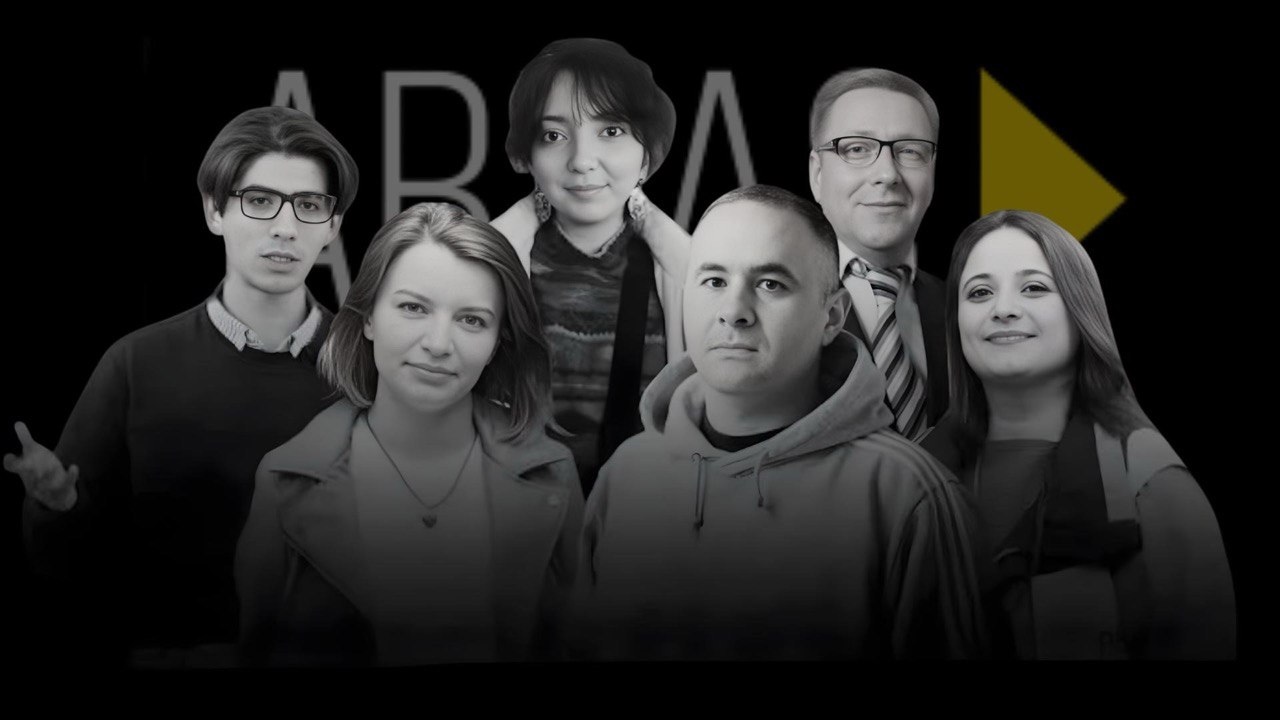
Since November 2023, Abzas Media director Ulvi Hasanli, editor-in-chief Sevinj Vagifgizi, project coordinator Mahammad Kekalov, investigative journalist Hafiz Babali, reporters Elnara Gasimova and Nargiz Absalamova, and RFE/RL contributor and economist Farid Mehralizade have been in custody.
They are accused of smuggling and serious financial crimes, allegations they and their supporters, both in Azerbaijan and internationally, reject as politically motivated and linked to their journalistic work.
The pre-trial and trial phases together have lasted nearly two years.
On June 20, the Baku Serious Crimes Court sentenced Hasanli, Vagifgizi, Babali and Mehralizade to nine years in prison; Absalamova and Gasimova to eight years; and Kekalov to seven years and six months. On 9 September, the Baku Court of Appeal upheld the verdict.